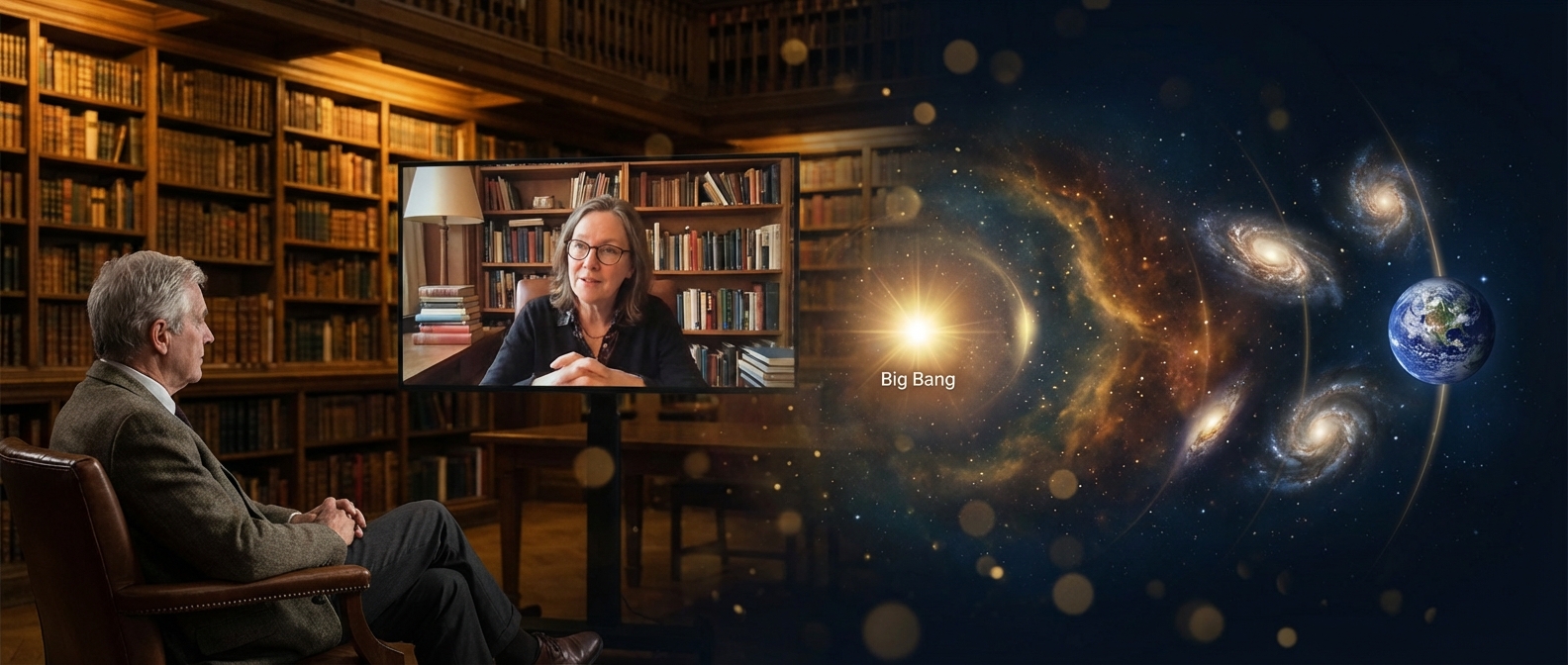
In the autumn of 2020, representing the Zhejiang University International Business School (ZIBS) "Meet the Author" lecture series, I invited Professor Branko Milanovic of the CUNY Graduate Center for an in-depth dialogue. Professor Milanovic is a foundational figure in the study of global inequality and a former lead economist at the World Bank. His book Capitalism, Alone: The Future of the System That Rules the World (Harvard University Press) advances a thought-provoking thesis: capitalism has become humanity's sole economic system, yet it rules the world through two starkly different incarnations.
I. "Capitalism, Alone" — A Structural Diagnosis of Our Era
At the outset of our dialogue, Professor Milanovic presented his core argument from a sweeping historical perspective: since the end of the Cold War, no viable alternative to capitalism exists anywhere in the world. Whether it is the American model or the Chinese model, both are fundamentally capitalist — the difference lies in how the institutions operate. He categorized the contemporary global economic order into two archetypes: liberal meritocratic capitalism and political capitalism.
The former, exemplified by the United States, emphasizes market competition and individual opportunity; the latter, typified by China, features the state playing a more active role in guiding the economy. Professor Milanovic stressed that these two systems are not abstract theoretical constructs but rather outcomes that evolved naturally from history. He specifically noted that China's "political capitalism" is rooted in its twentieth-century revolutionary experience — the communist revolution accomplished two historical tasks: liberation from external domination and the elimination of feudal and quasi-feudal systems, thereby laying the foundation for capitalist development.[1]
II. Six Mechanisms of Inequality: Why Liberal Capitalism Tends Toward Class Rigidity
The most academically substantial part of our dialogue was Professor Milanovic's systematic analysis of the mechanisms that intensify inequality within liberal meritocratic capitalism. He identified six mutually reinforcing structural factors that explain why inequality in Western nations such as the United States is drifting toward a self-replicating cycle:
- Extreme concentration of capital returns — The Gini coefficient for capital income approaches 1 (the theoretical maximum), far exceeding the 0.4 to 0.6 range typical of labor income. This means the fruits of capital are concentrated almost entirely in the hands of a very few.
- Higher asset returns for the wealthy — The assets of low- and middle-income earners consist primarily of real estate, while the top 5% hold predominantly financial assets. The returns on the latter are systematically higher because these individuals can afford professional advisors and access high-yield investment opportunities.
- The rise of "homoploutia" — This is a concept coined by Professor Milanovic, referring to the growing number of people who simultaneously earn high capital income and high labor income. "You are both a corporate executive earning a high salary and the owner of substantial capital assets." This stands in stark contrast to the clear dichotomy of the nineteenth century, where "capitalists had only capital and workers had only wages."
- Assortative mating (homogamy) — High earners tend to marry within their own social stratum. "I too met my wife through work, and we have very similar backgrounds. It's a perfectly natural and good thing, but it does exacerbate inequality."
- Intergenerational transmission through educational investment — Wealthy families invest heavily in their children's education, ensuring the next generation likewise commands both high capital income and high labor income.
- The conversion of economic power into political power — In liberal capitalism, economic elites influence policy through political donations and lobbying, further entrenching their economic advantages.
Professor Milanovic's conclusion is sobering: when these six factors operate in concert, liberal capitalism gives rise to a new class that is exceedingly difficult to dislodge — not a restoration of feudal aristocracy, but a class rigidity achieved under modern institutional frameworks in the name of "merit."[2]
III. China's Political Capitalism: An Alternative Path to Modernization
In discussing the Chinese model, Professor Milanovic displayed a rare scholarly balance. Drawing on extensive publicly available Chinese data, he analyzed the distinctive structure of inequality in China: the urban-rural gap — rather than a simple rich-poor divide — constitutes the primary source of inequality in China.
He observed that China's household registration (hukou) system has played a pivotal role in driving urbanization but has also created a unique form of social stratification. Notably, however, income inequality within cities appears to have stopped worsening in recent years and may even be declining — potentially indicating that China is approaching the "Lewis turning point," where the flow of labor from rural to urban areas gradually decelerates and wages for unskilled workers begin to rise in relative terms.
Even more profound was his symmetrical observation about the two systems: in liberal capitalism, economic power converts into political power; in political capitalism, political power converts into economic power. The corruption risks in both are equally real — only the direction is reversed. This analytical framework transcends simplistic ideological opposition and provides a more penetrating lens for understanding contemporary global governance.[3]
IV. COVID-19 and the Accelerating Transformation of Capitalism
As this dialogue took place during the COVID-19 pandemic in 2020, I specifically asked Professor Milanovic about the pandemic's impact on global capitalist trends. His response was remarkably forward-looking: "The longer the crisis lasts, the more profound the changes will be."
He analyzed three structural shifts accelerated by the pandemic: First, the spread of remote work is fundamentally altering the geographic structure of labor markets, disrupting the traditional logic of the "citizenship premium" — if you can work remotely for a U.S. company while living in a lower-cost home country, the incentive to migrate diminishes significantly. Second, the accelerated adoption of automation and AI is driving up the share of capital income, and given the extreme concentration of capital income, this trend will further exacerbate inequality. Third, political and trade tensions between China and the United States are sharpening the competition between the two capitalist models.
Regarding Sino-American relations, Professor Milanovic did not conceal his concern: "This is bad for the United States, bad for China, and bad for the world." Yet he also pointed out that the fundamental logic of globalization — comparative advantage and mutually beneficial exchange — has not disappeared because of political tensions, and he expressed hope for a return to a more rational framework for international cooperation.[4]
V. The Deep Structure of Global Inequality: Citizenship Premium and the Paradox of Migration
During the audience Q&A, I steered the discussion toward another of Professor Milanovic's core concepts — the "citizenship premium" and "citizenship penalty." This concept reveals that a significant portion of an individual's income in the global distribution is determined by the country of birth rather than personal talent or effort.
Professor Milanovic illustrated with data: individuals with identical education levels and occupations can see their incomes differ by several multiples solely due to nationality. However, the citizenship premium is not uniformly distributed — its impact is greatest for those at the bottom of their home country's income distribution. If you are already a high earner in your home country, the premium conferred by nationality may approach zero.
This analysis prompted deep reflection: in an era that proclaims "globalization," birthplace remains the single most important factor in determining an individual's economic fate. This is not merely an economic question but a profound ethical one — and the post-pandemic proliferation of remote work may be providing unprecedented technological possibilities for breaking through this predicament.[5]
VI. Reflection: Understanding Capitalism Is the Prerequisite for Building a Better One
This dialogue with Professor Milanovic took place in 2020, a year of dramatic upheaval in the global economic and political landscape, and its insights continue to resonate.
On inequality research, Professor Milanovic's concept of "homoploutia" has fundamentally changed the way I understand contemporary inequality. The traditional "labor versus capital" framework is no longer sufficient to explain today's reality — when the same group of people simultaneously commands the top tiers of both capital income and labor income, the nature of inequality has shifted from class conflict to class rigidity. The policy implications are far-reaching: raising the minimum wage or strengthening labor protections alone will not reverse the trend; the concentration of capital income must be addressed simultaneously.
On global governance, his symmetrical analysis of liberal capitalism and political capitalism — each with its own distinct corruption risks and institutional weaknesses — provides an intellectual foundation for pragmatic dialogue that transcends ideological opposition. At a time when Sino-American competition is intensifying, this analytical framework is invaluable.
On educational innovation, Professor Milanovic's analysis of how educational investment amplifies intergenerational inequality has deepened my understanding: genuine educational equity means not just "getting more people into university" but breaking the positive feedback loop between educational resources and family wealth. This is also why, in advancing cross-border educational partnerships at the ZIBS business school, I have consistently championed the principles of openness and inclusivity.
As Professor Milanovic remarked toward the close of our conversation: capitalism has "alone" conquered the entire world, and we cannot escape it. But understanding the mechanisms by which capitalism operates — whichever variety it may be — is the prerequisite for shaping a better future. This dialogue reminds us that in an era of profound uncertainty, rigorous scholarly analysis and open cross-national dialogue are more important than ever.
References
- Milanovic, B. (2019). Capitalism, Alone: The Future of the System That Rules the World. Harvard University Press. hup.harvard.edu
- Milanovic, B. (2019). The Clash of Capitalisms: The Real Fight for the Global Economy's Future. Foreign Affairs, 99(1), 10–18. foreignaffairs.com
- Milanovic, B. (2016). Global Inequality: A New Approach for the Age of Globalization. Harvard University Press. hup.harvard.edu
- Milanovic, B. (2020). The Real Pandemic Danger Is Social Collapse. Foreign Affairs. foreignaffairs.com
- Milanovic, B. (2015). Global Inequality of Opportunity: How Much of Our Income Is Determined by Where We Live? The Review of Economics and Statistics, 97(2), 452–460. doi.org