Every morning, millions of people pour into metro carriages, transported to office buildings scattered across the city. They collect their salaries, pay their mortgages, consume on weekends, and start again on Monday. They are not slaves — they have the freedom to choose their careers, the freedom to resign, the freedom to consume. Yet their days remain unchangingly the same, as if an invisible hand has arranged their life trajectories. This "unfreedom within freedom" is one of the most profound paradoxes of modern society. This article attempts to re-examine the "progress" we take for granted — transportation, education, employment — from the perspective of the "modern sharecropper," exploring how these systems liberate us while simultaneously constituting new forms of shackles.
I. From Classical Sharecroppers to Modern Workers
The Economic Logic of Sharecropping
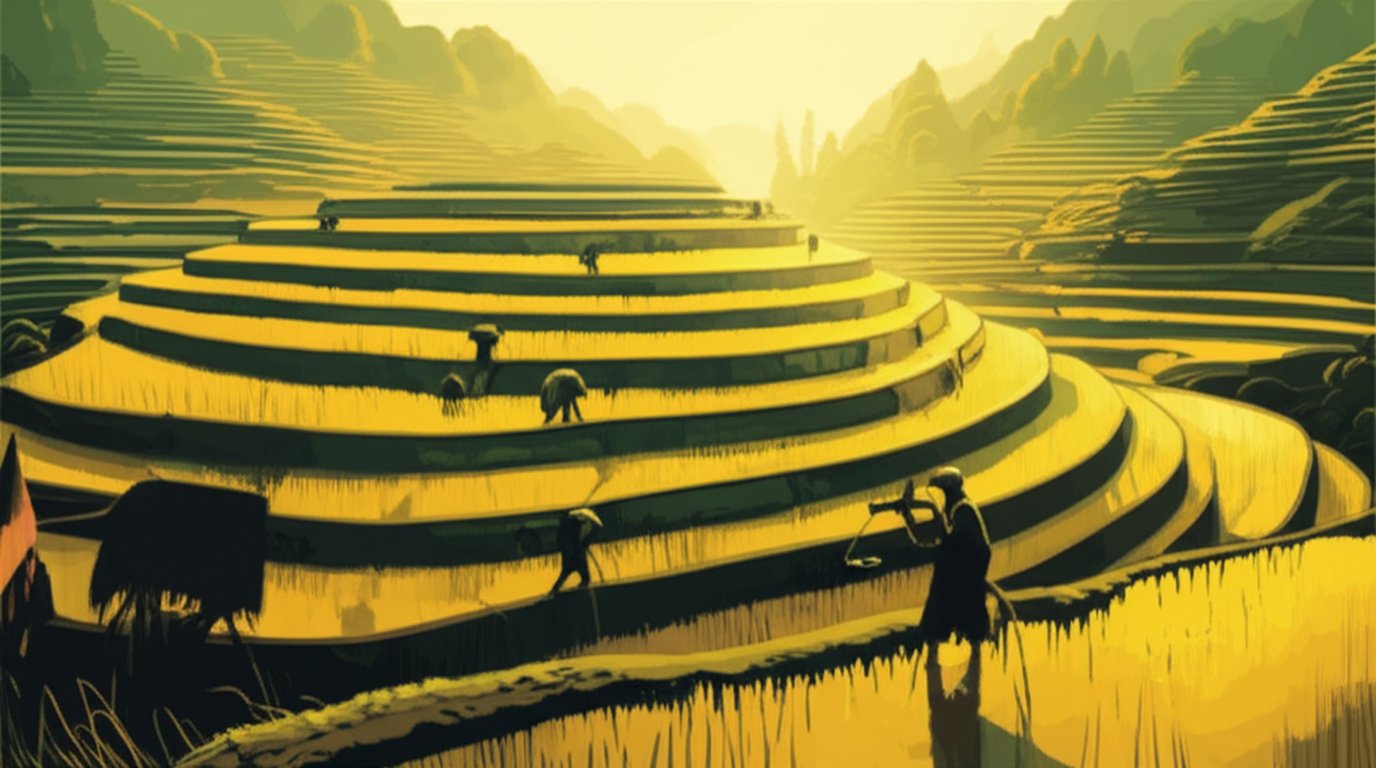
In traditional sharecropping systems, farmers rented land from landlords to cultivate, with harvests divided proportionally. Farmers did not own the land but possessed "freedom of labor" — they could choose to work diligently or slack off, choose this plot or that. In his seminal 1969 work The Theory of Share Tenancy, Steven Cheung argued that this system was efficient under certain conditions: it shared risks, reduced monitoring costs, and created an equilibrium acceptable to both parties.[1]
However, the sharecropper's "freedom" was a constrained freedom. He could choose to be diligent or lazy, but he could not choose "not to farm" — because he had no other means of livelihood. He could choose this landlord or that, but the conditions offered by different landlords were largely similar. He possessed formal choice but lacked substantive bargaining power. This predicament of "having choices but no good choices" is precisely the starting point for understanding modern labor relations.
Modern Workers: Old Wine in New Bottles?
Shifting our perspective to modern society, today's office workers no longer cultivate land but instead "cultivate" documents, spreadsheets, and code in offices. They do not pay grain to landlords but surrender the "surplus value" of their labor to corporate shareholders. Marx pointed out over a hundred and fifty years ago that the core mechanism of capitalism is "exploitation" — the value created by workers exceeds the wages they receive, and this difference is appropriated by capitalists as profit.[2]
Of course, the situation of modern workers differs fundamentally from that of traditional sharecroppers. They have legally protected labor rights, collective bargaining rights through unions, and a social insurance safety net. However, if we take a more macroscopic view, certain structural similarities persist:
- Concentration of means of production: Sharecroppers did not own land; modern workers do not own the enterprise's capital equipment, intellectual property, or brand assets.
- Limited choices: Sharecroppers could choose their landlord; workers can choose their employer — but within specific industries, regions, and skill sets, choices are often limited.
- Systemic dependence: Sharecroppers depended on the land tenure system; workers depend on the wage system — leaving these systems means losing the basis for survival.
This is not to deny the progress of modern society. The material living standards of workers are far higher than those of ancient sharecroppers — that is an indisputable fact. But the question we must ask is: does this "progress" obscure certain persistent structural problems? Have we, because things are "better than before," forgotten to ask whether they are "good enough"?[3]
II. The Metro: A Cage of Efficiency
The Political Economy of Transportation Infrastructure
The metro (subway, MRT) is the pride of the modern metropolis. It is fast, punctual, and environmentally friendly, liberating people from the nightmare of traffic jams. However, geographer David Harvey reminds us that the shaping of urban space is never neutral — it reflects and reinforces specific power relations and economic interests.[4]
From capital's perspective, what is the core function of the metro system? It is "to efficiently transport the labor force to locations where capital is concentrated." The skyscrapers of commercial districts house corporate headquarters, financial institutions, and professional services firms; the radial metro network delivers workers from all directions to these "profit production centers." At eight in the morning, the flood of people surges in; at eight in the evening, it disperses. The metro is a massive "labor conveyor belt."
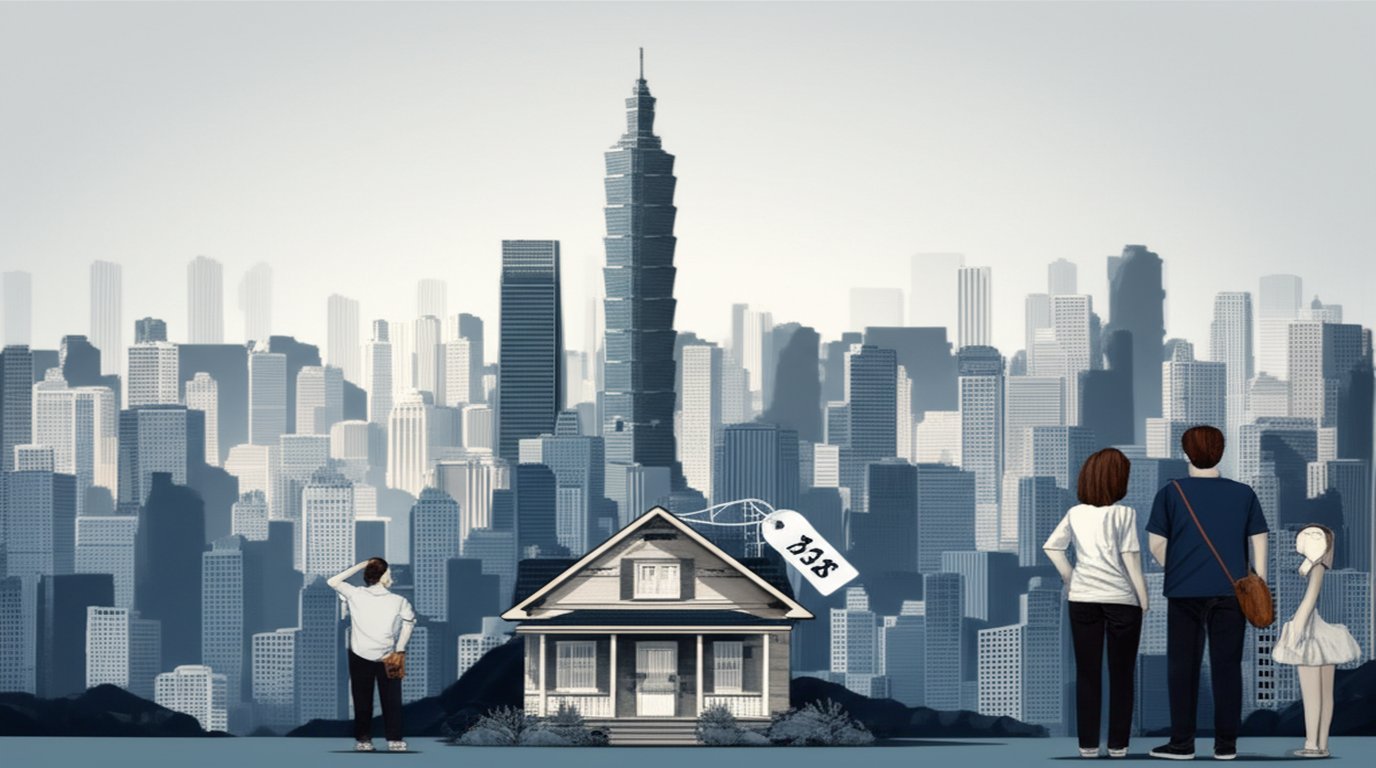
This is not to say the metro is "evil." It genuinely makes commuting more convenient, affordable, and environmentally friendly. But we must recognize that "convenience" itself is a constructed concept. The metro makes the lifestyle of "living in the suburbs, working in the city center" viable; yet it is precisely this lifestyle that causes workers to accept longer commute distances, higher housing prices, and more fragmented living spaces.[5]
Commute Time: Whose Time?
According to surveys by Taiwan's Directorate General of Budget, Accounting and Statistics, the average one-way commute time for office workers in the Taipei metropolitan area is approximately 40 minutes, roughly 80 minutes round-trip per day. Over 250 working days per year, that amounts to 333 hours — equivalent to 14 days without sleep. This time is "dead time": it does not belong to work (no wages are earned), nor to leisure (it cannot be fully utilized), nor to family (one has either left or not yet arrived).[6]
Paradoxically, this commute time is "invisible" in economic statistics. Employers do not pay for their employees' commuting time; government employment statistics count only "working hours," not "time spent for work." Commuting costs are "externalized" onto workers, becoming a hidden, uncounted labor burden.
The deeper question is: why do we need such long commutes? Because "work" and "life" have been spatially separated. This separation is not natural but the product of a specific historical process — the Industrial Revolution concentrated production in factories, the post-industrial era concentrated services in commercial districts, and workers were forced to shuttle back and forth between these concentration points.[7]
The Price of "Convenience"
The "convenience" of the metro makes us forget to ask: why must life be so inconvenient that it needs the metro as a remedy? If residential areas, workplaces, commercial zones, and leisure spaces could be more evenly distributed, would we still need to shuttle underground every day?
Of course, this involves complex issues of urban planning and economic agglomeration effects. There are economically efficient reasons for businesses to concentrate in specific areas — knowledge spillovers, labor markets, face-to-face interaction. But we must ask: efficient for whom? Workers spend enormous amounts of time commuting so that businesses can operate more "efficiently"; these commuting costs are borne by individual workers, while the benefits accrue to capital. This is a systemic cost transfer.[8]
III. Education: The Art of Domestication
The Historical Origins of Schools
The rise of the modern public education system is inseparable from the Industrial Revolution. In the nineteenth century, Prussia established the world's first compulsory education system, with explicit objectives including: cultivating obedient soldiers, loyal citizens, and punctual, disciplined workers. This model was subsequently adopted by other countries, becoming the prototype for modern education.[9]
What kind of labor force did industrial capitalism need? Workers who could show up on time, obey orders, and repeatedly execute standardized tasks at fixed positions. Traditional rural society did not produce such people — farmers were accustomed to working according to seasons and weather, not clocks; they were used to arranging their own task sequences, not following supervisors' commands; their skills were diversified, not specialized.
The function of schools was to transform "rural children" into "industrial workers." Schools trained children to follow bell schedules (simulating factory shift systems), sit in fixed seats to listen to lectures (simulating assembly line fixed positions), obey teachers' authority (simulating subordination to managers), and be evaluated by standardized tests (simulating quality control). This is not a conspiracy theory — it was an explicitly stated policy objective.[10]
The Hidden Curriculum: Cultivating Compliance
Educational sociologists have proposed the concept of the "hidden curriculum": schools teach not only explicit knowledge and skills but also an implicit set of values and behavioral patterns. In his classic 1968 study, Philip Jackson identified three things that schools teach students: crowd living, evaluation, and submission to power. These "hidden curricula" shape students' character and worldview more profoundly than mathematics or language.[11]
French sociologist Pierre Bourdieu further revealed how education reproduces social inequality. He pointed out that schools, while ostensibly open to all, systematically favor the "cultural capital" of the upper-middle class — their linguistic styles, aesthetic tastes, and social etiquette. Children from working-class families, even when equally intelligent, are often eliminated due to lacking the "correct" cultural capital. Education does not narrow class gaps but rather "legitimizes" them.[12]
British sociologist Paul Willis's ethnographic study Learning to Labor revealed another dimension: how working-class children "actively" walk toward working-class destinies. He found that these children do not passively accept class reproduction but instead develop an "anti-school culture" through rebellion against school authority — disdaining knowledge, glorifying physical labor, and emphasizing masculinity. Ironically, this "rebellion" is precisely what leads them toward working-class jobs, completing the cycle of class reproduction.[13]
The Alienation of Education
Austrian thinker Ivan Illich, in his 1971 work Deschooling Society, offered the most radical critique of the school system. He argued that schools have alienated "learning" into "being educated," transforming humanity's natural curiosity and desire for knowledge into the pursuit of degrees, certificates, and grades. Schools teach people to believe that knowledge can only be obtained through institutionalized education; learning without school certification does not count as "real" learning.[14]
The consequences of this alienation are far-reaching. People lose the ability and confidence to learn independently; lifelong learning becomes lifelong certification; creativity is stifled by standardized answers; questioning authority is treated as a disciplinary problem. More fundamentally, education transforms from a tool for "liberating human potential" into a machine for "molding people into economic cogs."
We are not denying the value of education — the transmission of knowledge, cultivation of skills, and socialization functions are all important. What we must ask is: is the current educational system the best way to realize these values? While imparting knowledge, does it also suppress potential? While "cultivating talent for society," does it also "domesticate labor for capital"?[15]
IV. The Illusion of Freedom: How the Disciplinary Society Operates
From External Coercion to Internal Discipline
French philosopher Michel Foucault's concept of "discipline" provides a critical framework for understanding the operation of modern power. Foucault argued that power in modern society no longer operates primarily through violence, punishment, and other forms of "external coercion," but rather through "discipline" — a set of techniques that induce people to "self-manage."[16]
The core mechanism of disciplinary power is "panopticism" — an arrangement that makes the surveilled feel they "could be watched at any time." Under this arrangement, people automatically regulate their behavior even when no one is actually watching. The layout of school classrooms, the design of factory assembly lines, and the open-plan office all embody this panoptic logic.
The result is that modern people, without police officers standing guard with guns, will "automatically" show up to work on time, work diligently, and follow the rules. They internalize the social norm of "this is how it should be" as the personal desire of "this is how I want it." This is the most ingenious aspect of modern power: it makes people feel they are "freely choosing" to follow the rules, rather than "being forced" to follow them.
Consumerism: Another Form of Shackles
If work is "the discipline of production," consumption is "the discipline of reproduction." The critical theorists of the Frankfurt School pointed out that consumerism is not merely an economic phenomenon but an ideological machine. It ensures that workers channel the wages earned through hard labor back into the capitalist system, purchasing commodities produced by capitalists, thereby completing the circuit of capital.[17]
More importantly, consumerism provides a "compensatory mechanism." Work is tedious, exploitative, and devoid of meaning — but weekend shopping, travel, and entertainment can "make up for" these deficiencies. The slogan "work hard, play hard" precisely depicts this exchange logic: trading alienated labor for alienated leisure.
Sociologist George Ritzer proposed the concept of "McDonaldization," describing how modern society extends the principles of efficiency, predictability, calculability, and control into every domain of life. Not only work but even leisure has been "McDonaldized" — standardized travel itineraries, chain shopping malls, and predictable entertainment experiences. We think we are "choosing" how to spend our weekends, but the options have already been pre-arranged.[18]
"Voluntary Servitude"
Sixteenth-century French thinker Etienne de La Boetie, in his Discourse on Voluntary Servitude, posed a piercing question: why do people obey tyrants? His answer is disquieting: because people have become accustomed to servitude and even depend on it. They surrender their freedom not because they are forced, but because the burden of freedom is too heavy to bear.[19]
This concept has profound implications for understanding modern society. The "unfreedom" of modern people is rarely coercion at gunpoint; it is more often a "voluntary" choice. We "choose" to take on a thirty-year mortgage, "choose" to commute two hours daily, "choose" to work overtime late into the night, "choose" to send our children to cram schools. Each individual choice appears "rational" and "voluntary," but aggregated together, they constitute an invisible set of shackles.
This is not to blame individual choices. Within existing social structures, these choices are often the "least bad options." The problem lies in the structure itself: why are our options so limited? Why are "good choices" so scarce? Why is the cost of "opting out" so prohibitively high?[20]
V. Unchanging Days: The Colonization of Time
The Tyranny of Linear Time
The modern conception of time is a historical product. Before the Industrial Revolution, people's time was "task-oriented" — finish this task, then move to the next; busy during harvest, idle during off-season. The Industrial Revolution brought "clock time" — precise, quantifiable, tradeable time. Workers "sell" time to employers; time became a commodity.[21]
Historian E.P. Thompson's classic essay "Time, Work-Discipline, and Industrial Capitalism" described the painful process of this transformation. Factory owners had to spend decades getting workers to "accustom" themselves to working by the clock. They used fines, dismissals, and moral exhortation to shape "punctuality" into a "virtue." Today, we have completely internalized this conception of time and can scarcely imagine an alternative way of living.
This linear, homogenized conception of time provides the foundation for capitalism's operation. Only when time can be quantified, divided, and traded can a "labor market" exist. One hour of labor is interchangeable and priceable — regardless of whether that hour is a creative state of flow or mind-numbing boredom. The "quality" of time is reduced to "quantity."[22]
Day After Day: The Prison of Repetition
For many modern people, life is constituted by repetition. Work Monday through Friday, rest on weekends, then start over again. Work January through December, vacation during annual leave, then start another year. This repetition is not the "cyclicality" of traditional society — which was a rhythm corresponding to seasons and life cycles — but a mechanical, undifferentiated "repetition."
Sociologist Zygmunt Bauman described modern society as "liquid modernity" — everything changes, yet nothing really changes. Jobs may change, but the fact of "working for a salary" does not; partners may change, but the anxiety of "seeking a partner" does not; residences may change, but the predicament of "carrying a mortgage" does not. Surface fluidity masks deep-level stagnation.[23]
This feeling of "unchanging sameness" is an existential predicament shared by many modern people. It is not caused by a lack of "opportunities" — modern society is replete with the rhetoric of "opportunity." It is because these "opportunities" often lead to the same destination: becoming a more efficient laborer, a more active consumer, a "successful person" who better conforms to social expectations.
The Burnout Society
Korean-German philosopher Byung-Chul Han, in The Burnout Society (Mudigkeitsgesellschaft), argued that contemporary society has transitioned from the "disciplinary society" Foucault described to an "achievement society." The keyword of the disciplinary society is "may not" (prohibition, command, obedience); the keyword of the achievement society is "can" (ability, performance, self-actualization).[24]
In the achievement society, oppression does not come from external supervisors but from internal self-demands. "You can do it," "nothing is impossible," "if you work hard you will succeed" — these motivational slogans appear liberating but actually internalize pressure onto the individual. Failure is no longer a systemic problem but a problem of "you not trying hard enough."
The result is pervasive "burnout." Modern people are not crushed by external oppressors but by themselves. They overwork, over-strive, and over-flagellate themselves until they are physically and mentally exhausted. Han describes this as "self-exploitation" — people become their own slave masters.
VI. Where Is the Way Out?
Awakening Consciousness: Seeing the Structure
The first step toward change is "seeing" — seeing the structural factors behind the arrangements we take for granted. The metro is not merely a "mode of transportation" but the product of a specific model of urban development; schools are not merely "places of learning" but mechanisms of socialization and class reproduction; "free choice" is not merely the expression of individual will but a limited set of options within specific structural constraints.[25]
This "structural perspective" is not meant to induce despair or helplessness but to reveal the possibility of change. Individuals cannot change structures alone, but structures are not monolithic — they are formed through the accumulated actions of countless people and can be changed through the accumulated actions of countless people.
Redefining "Success" and "the Good Life"
Contemporary society's definition of "success" is highly homogenized: higher income, bigger house, better position, more consumption. This definition locks people into endless competition and pursuit. Redefining "success" is the key to breaking this cycle.[26]
What is "the good life"? More leisure time? Deeper interpersonal connections? More creative activities? Fewer material desires? These questions have no standard answers, but what matters is asking them — rather than unthinkingly accepting the ready-made answers that consumerism provides.
The Possibility of Collective Action
Structural problems require structural solutions. Individual "awakening" is necessary but not sufficient. Real change requires collective action: the power of unions, the pressure of social movements, policy reform, and institutional redesign.[27]
None of the major social transformations in history — the abolition of slavery, the eight-hour workday, universal suffrage, social insurance — were achieved through individuals "changing their mindset." They were all the result of collective struggle. The myriad problems of modern society likewise require collective effort to resolve.
Conclusion: Between Freedom and Shackles
The concept of the "modern sharecropper" is not meant to negate the achievements of modern society but to remind us to maintain a critical distance. We are far freer than the sharecroppers of old, but that does not mean we are "free enough." Our choices are far more numerous than in the past, but that does not mean we have "genuine choices."
Every day, millions of people pour into metro carriages, transported to office buildings in every direction. They are not slaves; they are "free laborers." But freedom is a matter of degree, not a binary. Between legal freedom and substantive autonomy lies a vast gray area. Confronting this gray area is the starting point for pursuing a more complete freedom.
Ultimately, the problem lies not with the metro, schools, or corporations themselves, but with the overall system they constitute — a system that reduces human value to productivity and purchasing power. Challenging this system requires reimagining a different social arrangement: one where work is not merely for survival but a means of realizing potential; education is not merely for employment but a journey of intellectual awakening; transportation is not merely getting from A to B but a thread connecting all dimensions of life. This vision may seem utopian, but if we lose even the capacity to imagine, change will never come.[28]
References
- Cheung, S. N. S. (1969). The Theory of Share Tenancy. University of Chicago Press. Steven Cheung's classic work on sharecropping theory.
- Marx, K. (1867). Das Kapital, Vol. 1. Marx's systematic analysis of the mechanisms of capitalist exploitation. [Marxists.org]
- Standing, G. (2011). The Precariat: The New Dangerous Class. Bloomsbury Academic. Guy Standing's analysis of the "precariat."
- Harvey, D. (2012). Rebel Cities: From the Right to the City to the Urban Revolution. Verso Books. Harvey's critique of the political economy of urban space.
- Graham, S., & Marvin, S. (2001). Splintering Urbanism: Networked Infrastructures, Technological Mobilities and the Urban Condition. Routledge.
- Directorate General of Budget, Accounting and Statistics, Executive Yuan (2023). National Living Conditions Survey. Commuting time statistics. [DGBAS]
- Lefebvre, H. (1991). The Production of Space. Blackwell. Lefebvre's critical theory of spatial production.
- Cowen, D. (2014). The Deadly Life of Logistics: Mapping Violence in Global Trade. University of Minnesota Press.
- Gatto, J. T. (2001). The Underground History of American Education. Oxford Village Press. A critical historical analysis of the Prussian education model.
- Bowles, S., & Gintis, H. (1976). Schooling in Capitalist America: Educational Reform and the Contradictions of Economic Life. Basic Books. A classic study on education and capitalist reproduction.
- Jackson, P. W. (1968). Life in Classrooms. Holt, Rinehart & Winston. The origin of the "hidden curriculum" concept.
- Bourdieu, P., & Passeron, J.-C. (1977). Reproduction in Education, Society and Culture. SAGE Publications. Bourdieu's analysis of educational reproduction.
- Willis, P. (1977). Learning to Labor: How Working Class Kids Get Working Class Jobs. Columbia University Press. The classic ethnography Learning to Labor.
- Illich, I. (1971). Deschooling Society. Harper & Row. Illich's deschooling thesis. [PDF]
- Freire, P. (1970). Pedagogy of the Oppressed. Continuum. Freire's liberatory pedagogy. [PDF]
- Foucault, M. (1975). Discipline and Punish: The Birth of the Prison. Gallimard. Foucault's classic analysis of disciplinary power.
- Horkheimer, M., & Adorno, T. W. (1944). Dialectic of Enlightenment. Social Studies Association. The Frankfurt School's critique of the culture industry. [Marxists.org]
- Ritzer, G. (1993). The McDonaldization of Society. SAGE Publications. A sociological analysis of McDonaldization.
- La Boetie, E. de (1576). Discourse on Voluntary Servitude. An early critique of power and obedience. [Online]
- Fisher, M. (2009). Capitalist Realism: Is There No Alternative? Zero Books. "Capitalist realism" and ideological critique.
- Thompson, E. P. (1967). Time, work-discipline, and industrial capitalism. Past & Present, 38, 56-97. [DOI]
- Adam, B. (1995). Timewatch: The Social Analysis of Time. Polity Press. A sociological analysis of time.
- Bauman, Z. (2000). Liquid Modernity. Polity Press. Bauman's analysis of liquid modernity.
- Han, B.-C. (2010). Mudigkeitsgesellschaft (The Burnout Society). Matthes & Seitz Berlin. Han's critique of the burnout society.
- Mills, C. W. (1959). The Sociological Imagination. Oxford University Press. Mills's classic exposition of "the sociological imagination."
- Schor, J. B. (1991). The Overworked American: The Unexpected Decline of Leisure. Basic Books. A critical analysis of overwork.
- Wright, E. O. (2010). Envisioning Real Utopias. Verso Books. Wright's sociological imagination of real utopias.
- Graeber, D. (2018). Bullshit Jobs: A Theory. Simon & Schuster. Graeber's critique of "bullshit jobs." [Original Essay]